
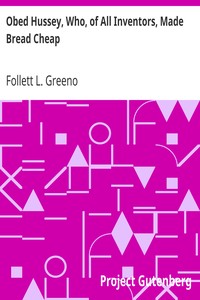
Obed Hussey, Who, of All Inventors, Made Bread Cheap by Follett L. Greeno
Let's be honest: the title is a mouthful. But what's inside is a fascinating, if sometimes technical, argument for rewriting a chapter of American history. The book isn't a novel; it's a deeply researched defense of an overlooked inventor.
The Story
Follett L. Greeno lays out a clear timeline: Obed Hussey, a former sailor, publicly demonstrated a working mechanical reaper in 1833, a full year before Cyrus McCormick's famous patent. Hussey's machine worked, farmers bought it, and it helped harvest the grain that fed a growing nation. But then, the legal and public relations battles began. The book walks us through the epic patent wars, the courtroom dramas, and the savvy business maneuvers McCormick used to dominate the market and the history books. Greeno presents letters, patent documents, and newspaper reports to build his case that Hussey was not just first, but that his machine was, in many practical ways, superior. The core of the story is Hussey's lifelong, and ultimately losing, fight to get the credit he believed he deserved.
Why You Should Read It
This book changed how I think about "invention." It's not just about who has the first spark of an idea, but who fights hardest to own the story. Greeno's passion is contagious. You feel his frustration on behalf of Hussey, this brilliant but perhaps too-honest man who was outmaneuvered by a better businessman. It's a powerful lesson in how fame isn't always about being the best or the first; it's often about being the loudest and the most persistent in shaping your legacy. Reading it, you start seeing "forgotten inventors" everywhere and wondering about their stories.
Final Verdict
This isn't a light beach read. It's perfect for history buffs who enjoy deep dives into primary sources, fans of legal dramas, or anyone interested in the business of innovation. If you liked books like The Immortal Life of Henrietta Lacks (another story about credit being misplaced), you'll appreciate the moral heart of this one. Be prepared for detailed descriptions of 19th-century farm equipment—but push through, because the human story at the center is genuinely compelling. In the end, it's a sobering but important reminder that history is written by the victors, and Obed Hussey, despite his world-changing invention, was not one of them.






Sandra Allen
2 months agoHonestly, the clarity of the writing makes this accessible. Don't hesitate to start reading.